
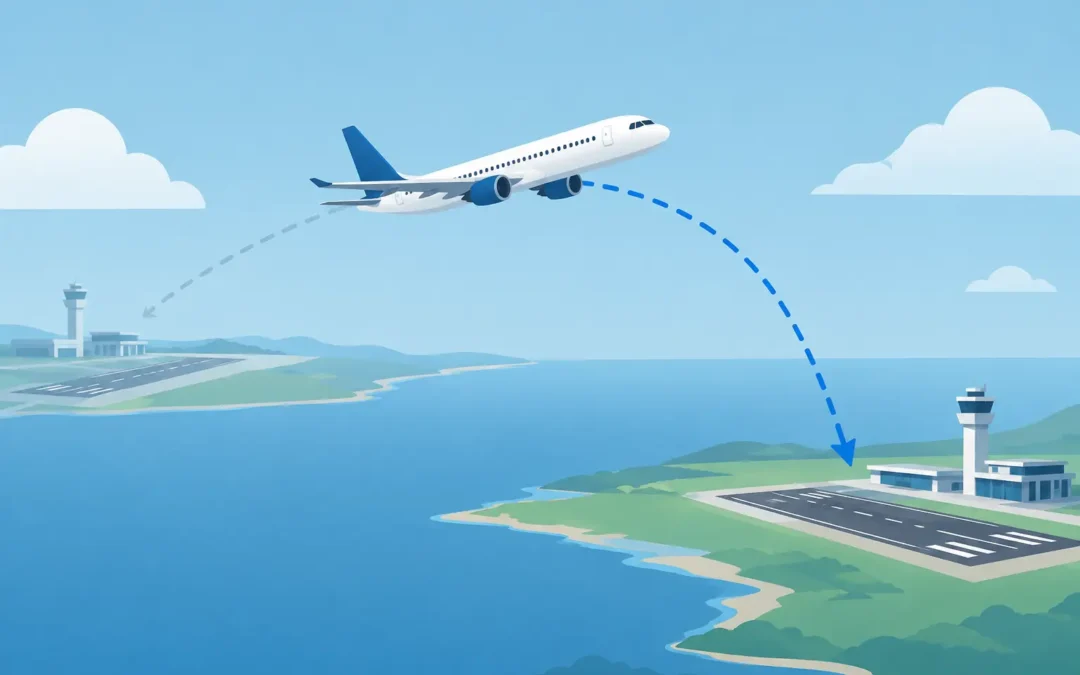
A flight can be 20 minutes from its planned arrival when the captain announces a diversion. For passengers with a meeting in Miami, a cruise departure in Port Everglades, or a chauffeur waiting at FLL, that announcement immediately changes more than the airport code on the screen. When travelers ask what happens during a flight diversion, the short answer is that safety takes priority first, while airline, airport, and ground transportation plans adjust afterward.
A diversion is disruptive, but it is not usually a sign that something has gone wrong with the flight itself. It is a controlled operational decision made to put the aircraft, crew, and passengers in the best available position to land safely and continue their journey.
Why a flight is diverted
The captain has final authority over the aircraft, working with dispatch, air traffic control, and the airline’s operations team. Diversions happen for many reasons. Severe thunderstorms around South Florida, low visibility, runway closures, congested airspace, mechanical indications, a medical emergency, or an airport security issue can all make the scheduled destination unsuitable or impractical at that moment.
Sometimes an aircraft diverts because it cannot wait in a holding pattern any longer without affecting fuel reserves. In other cases, the original airport may be open, but arrival delays are extensive enough that another airport is the safer or more efficient choice. A diversion is not the same as a canceled flight, although it can eventually lead to a cancellation if the aircraft, crew, or weather situation cannot be reset.
For private aviation, the decision follows the same safety-first logic. A flight may land at an alternate airport or fixed-base operator because of weather, runway conditions, airport restrictions, or a passenger medical concern. The arrangements on the ground can be more flexible, but the operating crew still has to follow safety, duty-time, customs, and airport procedures.
What happens during a flight diversion?
Once the decision is made, the crew informs passengers as soon as practical. The first announcement may not contain every detail because the flight deck is focused on navigation, fuel, weather, and coordination with air traffic control. The cabin crew continues normal safety procedures, prepares the cabin for landing, and manages passenger needs along the way.
The aircraft then lands at the alternate airport. That airport may be relatively close, such as a diversion between Miami International Airport and Fort Lauderdale-Hollywood International Airport, or it may be several states away if a large weather system or operational issue affects an entire region.
After landing, passengers may remain on board temporarily. The airline needs a gate or remote parking position, fuel service, a new flight plan, and potentially a replacement crew. If the diversion is brief and the crew can continue within legal duty limits, the aircraft may refuel and depart without passengers entering the terminal. If the delay is longer, passengers may deplane and wait inside the airport.
This is where timing becomes difficult to predict. A gate may not be available immediately. A thunderstorm may clear quickly, or it may continue to affect the planned destination for hours. Crew duty limits can also turn a short disruption into an overnight delay if the pilots or flight attendants can no longer legally operate the next segment.
Your baggage, connection, and airline rebooking
Checked baggage usually stays with the aircraft unless the flight ends at the diversion airport or passengers are instructed to collect it. If everyone is expected to continue on the same plane, bags generally remain loaded. If the airline cancels the flight, moves passengers to another carrier, or asks travelers to make their own onward arrangements, baggage instructions can change.
Travelers with carry-on bags are in a better position to manage an unexpected overnight stay or a change in airport. Keep medications, identification, chargers, business essentials, and a change of clothes in your personal item whenever possible. During irregular operations, access to checked bags may take time and is never guaranteed right away.
For connecting passengers, the airline’s system typically begins rebooking automatically, but it is wise to check the airline app, speak with a gate agent, or contact the carrier directly. A missed connection may be rebooked through a different hub or on a later flight. If you booked separate tickets, such as one airline flight followed by an unrelated domestic or international itinerary, the second carrier may not be obligated to protect the missed segment.
Compensation and hotel coverage depend on the airline, the cause of the diversion, and the terms of your ticket. Weather and air traffic control disruptions are often treated differently from airline-controlled mechanical or staffing issues. Policies also vary widely for international itineraries. Ask the airline what it will provide, keep receipts for reasonable expenses, and review any travel insurance or credit card trip-delay coverage you may have.
What to do as soon as you know your plans have changed
The most useful step is simple: communicate early. Notify the person meeting you, your hotel, event organizer, cruise line, or transportation provider as soon as you have a confirmed diversion airport or revised arrival time. Do not wait until the original pickup time has passed, especially when a transfer is tied to a ship departure, private terminal, or scheduled event.
Use the airline app for the most current operational updates, but recognize that displayed times can shift. A new departure estimate is not final until the aircraft has a crew, a departure clearance, and a realistic arrival slot. If you are arranging onward travel on your own, allow a meaningful buffer rather than booking a tight connection based on the first revised estimate.
For a group, designate one traveler to handle airline communication and another to update the ground plan. This prevents duplicated calls and ensures that the driver, coordinator, or family contact receives one clear message. Keep your phone charged and turn on notifications for both the airline and your transportation reservation.
Ground transportation after a diverted flight
Airport pickup becomes more complicated when a flight lands somewhere other than planned. A professional chauffeur service can monitor a flight number, but flight tracking alone does not always show whether passengers are still on board, held at a remote stand, waiting for bags, or rebooked onto another flight. Clear communication remains essential.
If a flight originally bound for MIA diverts to FLL, or the reverse, a traveler may decide to continue by car rather than wait for the airline to resume service. That can be practical, especially for time-sensitive meetings or cruise transfers, but availability, vehicle type, traffic, and the number of passengers all matter. A late-night diversion with luggage for six people requires a different solution than an executive traveling with one carry-on.
When making a revised ground transportation request, provide the diverted airport, airline and flight number, actual arrival status, passenger count, luggage count, and final destination. If you are still uncertain whether the flight will continue, ask about the cancellation or wait-time policy before confirming a new vehicle. Premium transportation is most effective when the provider has accurate information and enough notice to assign the right chauffeur and vehicle.
Omni Transportation Service monitors scheduled airport arrivals and operates around the clock for travelers whose South Florida plans change unexpectedly. Still, a direct update from the passenger or travel coordinator is the fastest way to align a pickup with the reality on the ground.
A diversion does not have to derail the day
No passenger can control weather, runway conditions, or an unexpected operational decision. What you can control is how quickly you verify the new plan, protect your essentials, and update the people responsible for your next move. Give the airline time to establish the aircraft’s status, then make decisions based on confirmed information rather than a hopeful estimate.
A calm, well-communicated response is often the difference between an inconvenient landing and a missed meeting, ship, or occasion. Keep your onward plans flexible, choose transportation that can respond professionally, and treat every revised arrival time as a working estimate until you are through the terminal and on your way.
Recent Comments